
Singapore’s weather punishes weak waterproofing. Heavy rain, high humidity and sudden temperature swings put constant stress on roofs, balconies, bathrooms and basements. Many homeowners only discover a problem after water stains appear on the ceiling or tiles start to lift. By then, the damage is already sitting inside the concrete.
This guide walks through the waterproofing mistakes that cause most leaks in Singapore homes and condos. It also explains what a qualified waterproofing service actually checks, so you know what good work looks like before you sign a quote.
Why Waterproofing Fails So Often in Singapore
Singapore’s climate creates two forces that most temperate countries never deal with.
The first is thermal expansion. A metal or concrete roof can swing from over 60°C in the afternoon sun to a much cooler temperature during a sudden downpour. This constant expansion and contraction pulls at sealants and membranes. A basic sealant with no flexibility will crack within months, and the leak returns before the next monsoon season.
The second is hydrostatic pressure. Once water gets past the surface layer, it sits inside the concrete like water in a sponge. Over time, this moisture reaches the steel reinforcement bars inside the slab and causes corrosion. The rusting steel expands and pushes outward, cracking the concrete and eventually causing chunks to fall away. This process is called spalling, and it is one of the most expensive defects to repair in any building.
Poor workmanship is still the biggest cause of failure. A membrane applied on a dusty, oily or damp surface will not bond properly, no matter how good the product is. Understanding where these failures start helps you avoid paying for the same repair twice.
Mistake 1. Skipping Proper Surface Preparation
Surface preparation is the single most important step in any waterproofing job, and it is also the step most often rushed. A membrane or coating needs a clean, dry and structurally sound surface to bond to. If the surface still has dust, oil, loose particles or trapped moisture, the membrane will lift or blister soon after installation.
Cracks and hollow sections in the concrete must be repaired first. Any waterproofing layer placed over an unrepaired crack will simply crack again in the same spot once the building moves with heat and rain.
Mistake 2. Using the Wrong Waterproofing Material
Not every waterproofing product suits every surface. A coating made for interior walls will not survive on an exposed rooftop, and a general purpose sealant will not hold up in a basement facing constant groundwater pressure.
Bathrooms and wet areas need a membrane rated for continuous water exposure and chemical contact from cleaning agents. Roofs need a flexible membrane that can handle Singapore’s daily heat cycles. Basements and retaining walls need a product built to resist sustained hydrostatic pressure. Choosing a product because it is cheap, rather than because it fits the application, is one of the fastest ways to guarantee a failure within a year.
Mistake 3. Ignoring Joints, Corners and Pipe Penetrations
Flat surfaces rarely fail first. Water almost always finds its way in through a junction point, such as where a wall meets the floor, where a roof slab meets a parapet wall, or around a pipe that passes through a slab.
These points move differently from the flat surface around them, so they need extra reinforcement, such as a fillet or fabric reinforcement strip embedded in the membrane. Skipping this step to save time is one of the most common defects found in failed waterproofing systems, and it is also one of the cheapest steps to do properly at the start.
Mistake 4. Applying a Coat That Is Too Thin
Waterproofing membranes are rated for a specific coverage rate, usually measured in litres per square metre or millimetres of thickness. Applying the product too thinly to stretch the material further, or to finish the job faster, weakens the entire membrane.
A thin coat may look fine on the day of application, but it will not hold up once the surface experiences ponding water, foot traffic or temperature swings. Skipping the primer coat entirely is just as damaging, since the primer is what allows the topcoat to bond firmly to the concrete.
Mistake 5. Treating Waterproofing as a DIY Weekend Project
Waterproofing looks simple from the outside. It usually is not. A homeowner who buys a tub of sealant and applies it themselves is treating the symptom, not the actual entry point of the water. Without a proper inspection, it is very easy to seal the wrong spot while the real leak keeps travelling underneath the surface and shows up somewhere else later.
A trained waterproofing provider inspects the site first, checks moisture levels, traces the water path, and only then recommends a system. This step alone prevents most of the repeat leaks that homeowners deal with after a DIY attempt.
Mistake 6. Hiring an Unlicensed or Uncertified Provider
In Singapore, waterproofing contractors handling basements, roofs and walls fall under the Building and Construction Authority’s CR13 classification. Working with a contractor registered under this classification means the company has met a baseline standard set by the regulator.
Beyond BCA registration, the Singapore Concrete Institute runs a Waterproofing Accreditation Scheme that recognises contractors committed to proper workmanship on wet area waterproofing. Choosing an accredited waterproofing service gives you a level of assurance that a random online quote simply cannot match, and it often affects how project quality is assessed under Singapore’s Construction Quality Assessment System.
Before hiring anyone, ask to see their registration, ask how long they have handled similar projects, and ask for photos or references from past work. A provider that avoids these questions is a warning sign.
Mistake 7. Ignoring Drainage and Ponding Water
Waterproofing and drainage work together. A membrane can be installed perfectly and still fail if water is left sitting on a flat roof or balcony for hours after every rain. Ponding water adds constant pressure on the membrane and shortens its lifespan significantly.
Falls and gradients need to direct water toward drainage outlets, and those outlets need to stay clear of debris. A waterproofing service that only looks at the membrane, and never checks the slope or the drains, is only solving half the problem.
Mistake 8. Skipping the Warranty and Documentation
A proper waterproofing job should come with written documentation, including the product used, the areas covered, and the warranty period. Many product manufacturers offer around ten years of coverage on the material itself, and some contractors offer a combined warranty covering both material and labour.
Homeowners who accept verbal promises instead of a written warranty often find themselves with no recourse when a leak returns two years later. Always get the warranty terms in writing before the job starts, not after it finishes.
How to Choose the Right Waterproofing Service in Singapore
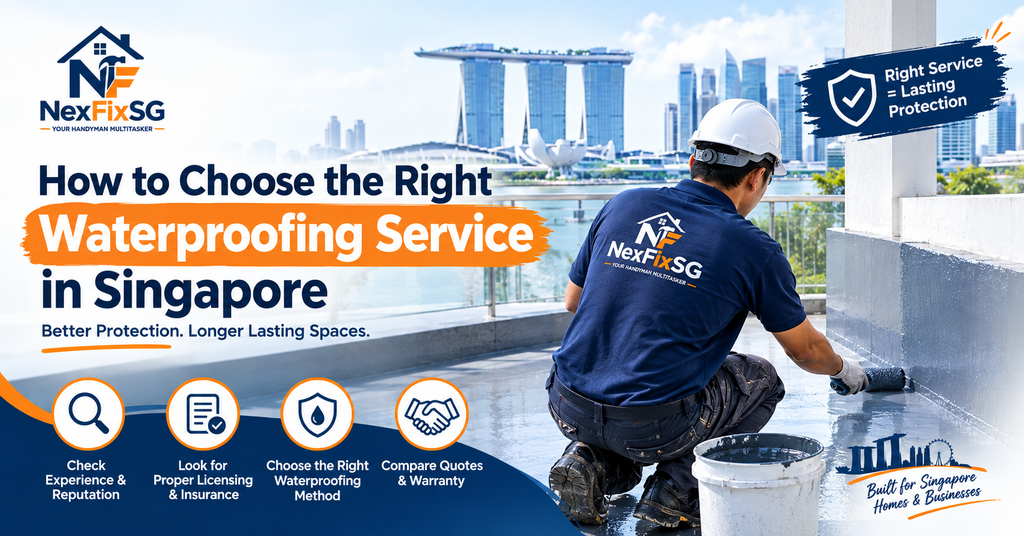
A few checks before hiring can save years of frustration.
Confirm the company is BCA CR13 registered and, ideally, accredited under the SCI Waterproofing Accreditation Scheme.
Ask for a physical site inspection before any quote is finalised. A provider offering a fixed price without seeing the site first is guessing.
Request a written scope of work that lists surface preparation, crack repair, primer, membrane type, coverage rate, and reinforcement at joints. A vague one line quote usually hides shortcuts.
Ask about the warranty period and whether it covers labour as well as material.
Ask for examples of similar projects completed in Singapore conditions, since a roof in a temperate country faces very different stress than a roof under Singapore’s sun and monsoon rain.
Final Thoughts
Most waterproofing failures in Singapore trace back to a handful of repeated mistakes, including poor surface preparation, the wrong material for the job, weak joints, thin coats, and hiring an unqualified provider. None of these mistakes are complicated to avoid once you know what to look for.
A qualified waterproofing service protects more than just paintwork. It protects the structure of your home from corrosion, spalling and long term water damage that becomes far more expensive to fix the longer it is ignored. Choosing a properly registered and experienced waterproofing provider at the start is always cheaper than repairing the same leak twice.