
Roof Waterproofing Singapore
Singapore gets over 2,000mm of rain a year. That constant exposure wears down even a well-built roof, and once water finds a crack, it doesn't stop at the roof, it tracks into ceilings, walls, and the unit below. NexFix Engineering finds where a roof is failing and seals it with a system built for Singapore's climate, not a generic patch job.
Get a Free Quote Now
Why Singapore Roofs Need Waterproofing
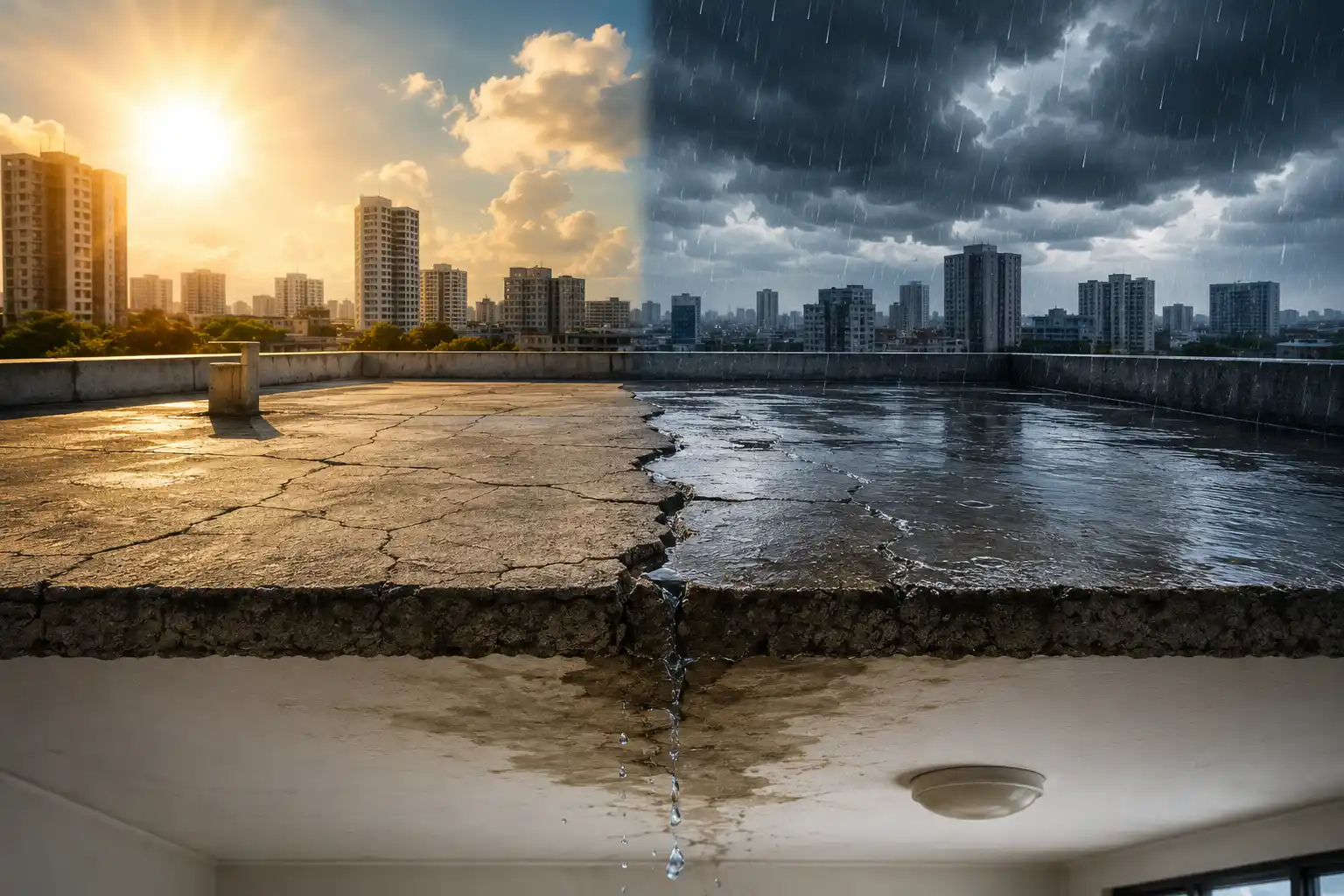
Heat, UV rays, and heavy rain hit Singapore roofs all year, with no dry season to let materials recover. Flat concrete roofs, common on HDB blocks and landed homes, expand and shrink with every hot afternoon and sudden downpour. That constant movement opens hairline cracks over time, and once a crack forms, rainwater sits in it and works its way through the slab. Left untreated, a small crack becomes a ceiling leak in the unit below within a few rainy seasons.
Common Causes of Roof Leaks
Most roof leaks in Singapore come down to a handful of repeat causes:
Thermal expansion cracks.
Concrete roofs expand in heat and contract at night, and years of this movement opens small cracks in the slab.
Water ponding.
Flat roofs with poor slope or blocked drains hold rainwater instead of draining it, which puts constant pressure on weak spots.
Worn waterproofing membrane.
Every membrane has a lifespan. Once it passes 10 to 15 years, UV exposure and rain wear it thin.
Poor original installation.
A membrane applied without proper surface prep or with missed corners fails early, sometimes within a few years.
Corrosion on metal roofs.
Rust at seams, loose fasteners, and cracked sealant let water in around joints, not through the metal sheet itself.
Cracked or dislodged tiles.
Common on landed homes with pitched or tiled roofs, where a single shifted tile is enough to let rain through.
Roof Types We Waterproof
Singapore properties use a few main roof types, and each needs a different approach.
Flat concrete (RC) roofs
Flat concrete (RC) roofs are the most common type on HDB blocks and many condos. They're prone to ponding and cracking, so waterproofing here usually means a membrane system that can bridge small cracks and handle standing water.
Metal roofs
Metal roofs are common on landed homes and industrial buildings. The main risk is corrosion at seams and fasteners, so we focus on sealants and protective coatings at every joint, not just the flat panels.
Tiled and pitched roofs
Tiled and pitched roofs on landed properties leak through gaps between tiles or damaged flashing. We check and reseal these points before applying a broader waterproofing layer where needed.
Roof Waterproofing Methods We Use
We choose the method based on your roof type, condition, and budget, not a single default product.
Polyurethane (PU) membrane.
Flexible and UV-resistant, ideal for flat concrete roofs exposed to direct sun and rain.
Bituminous membrane.
A tough, proven option for flat roofs, applied as torch-on sheets or self-adhesive rolls.
Cementitious coating.
Cement-based and easy to bond to concrete, a solid choice for HDB rooftop slabs.
PU injection.
Used to seal active cracks directly, often without removing existing tiles or finishes.
Signs Your Roof Needs Waterproofing
Book an inspection if you notice any of these:
Water stains or discoloured patches on your ceiling after rain
Standing water on a flat roof that doesn't drain within a day
Peeling paint or bubbling on the ceiling below the roof
A musty smell in the top-floor unit
Visible cracks or gaps in the roof surface
Our Roof Waterproofing Process
We inspect the roof and check for cracks, ponding, and membrane condition. Moisture readings confirm how far water has already spread into the slab. Once we find the cause, we clean and prepare the surface, apply the right waterproofing system, and test the area before handover. You get a written report, a clear price, and a warranty on the work.
Roof Waterproofing Cost in Singapore
Roof waterproofing in Singapore typically starts from $5 to $20 per square meter, or roughly $500 to $3,000 for a standard job, depending on roof size, access, and the condition of the existing surface. Roofs with heavy damage, ponding, or hard-to-reach areas cost more due to the extra prep work involved. We provide a free site inspection and an itemized quote before any work begins, so there are no surprises once the job starts.
Who Is Responsible for a Leaking HDB Roof?
If you live on the top floor of an HDB block and notice a ceiling leak, the cause is often the rooftop above your unit, which falls under your Town Council's responsibility to repair, not yours. If the leak comes from window frames, air-conditioner ledges, or other fixtures within your own unit, that repair is on you as the flat owner. For condos, rooftop and common area waterproofing usually falls under the MCST, while leaks originating inside a private unit are the owner's responsibility. If you're unsure where a leak is coming from, our inspection identifies the source so you know who to contact before paying for repairs that aren't yours to fix.
Why Choose NexFix Engineering
We inspect before we quote, so you know exactly what's wrong before we recommend a fix. We use branded membranes and coatings built for Singapore's climate, not generic substitutes, and every roof waterproofing job comes with a written warranty. Our team works across HDB, condo, landed, and commercial roofs islandwide, with clear pricing and no hidden charges after the job starts.
Frequently Asked Questions
How long does roof waterproofing last?
A properly installed system typically lasts 10 to 15 years, depending on the material used and how exposed the roof is to sun and rain.
Can you waterproof a roof without removing the old membrane?
In many cases, yes. If the existing membrane is still bonded and only failing in specific spots, we can overlay a new system after proper surface prep. Badly deteriorated membranes need full removal first.
Do I need approval before waterproofing my condo roof?
Rooftop and common area work usually needs MCST approval, since the roof is common property. We can help identify what's required and assist with the paperwork.
How long does the work take?
A standard HDB or landed roof usually takes one to three days. Larger commercial roofs can take one to two weeks depending on size and access.
Get a Free Roof Inspection
If your ceiling is showing stains or your roof is past its last waterproofing job, don't wait for the next storm to make it worse. WhatsApp NexFix Engineering at +65 8265 8097 or email nexfixsg@gmail.com for a free site inspection and an itemized quote.