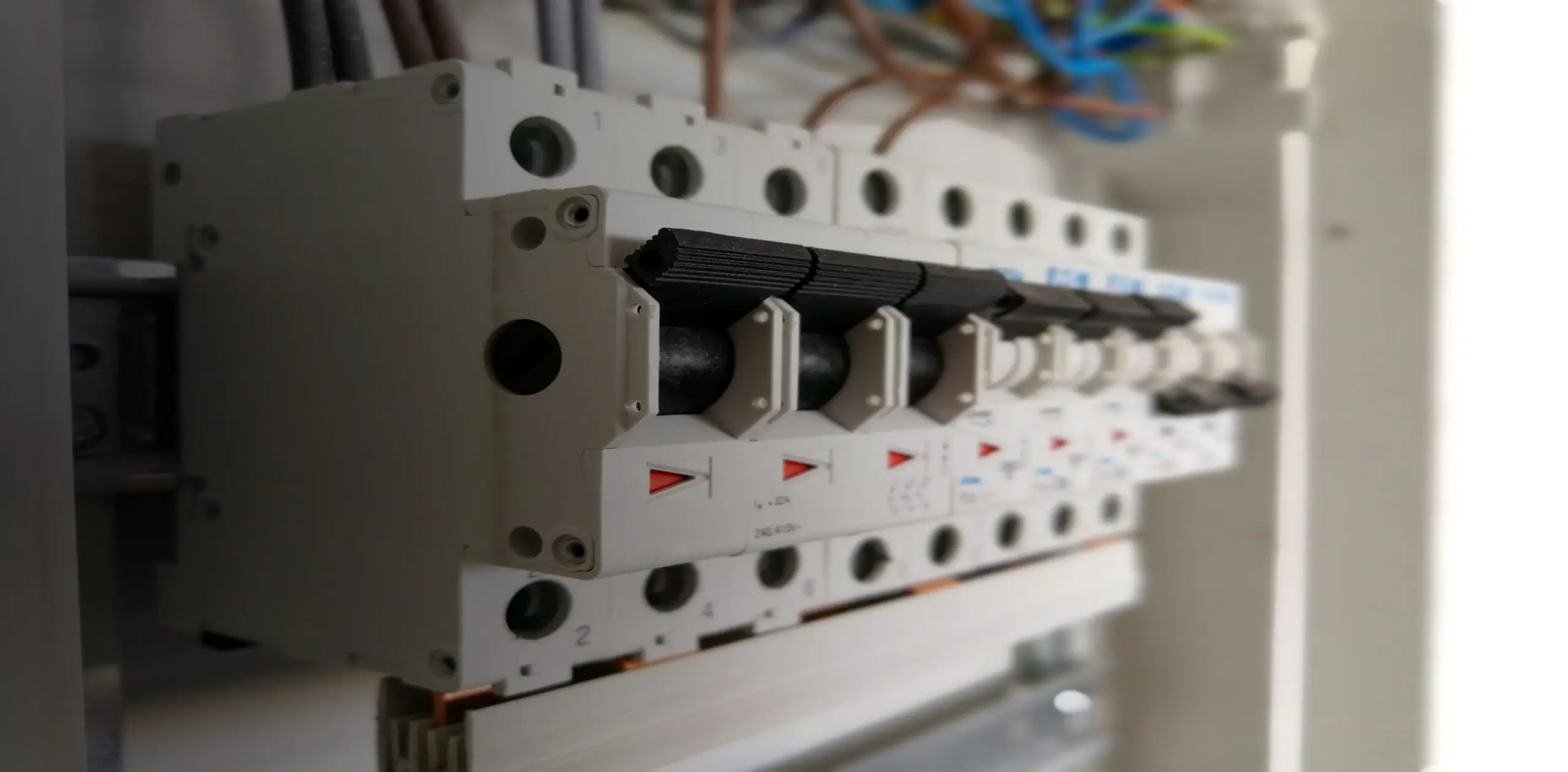
Circuit Breaker Tripping in Singapore: Causes, Diagnosis, and When to Call a Licensed Electrician

This guide walks through the three reasons your circuit breaker trips, how to narrow down which circuit is actually causing the problem, what you can safely try yourself, and where Singapore's electrical safety laws draw a hard line on DIY repairs.
Your circuit breaker just tripped again, and the lights went out for the third time this week. Before you reach for the reset switch out of habit, it helps to understand what that breaker is actually telling you. A tripped breaker isn't a malfunction — it's your electrical system doing exactly what it's designed to do: cutting power before a fault turns into something worse.

That distinction matters more in Singapore than most homeowners realise. The Singapore Civil Defence Force recorded 304 calls for electrical-origin fires in 2025, with wiring faults, defective appliances, and overloaded sockets named as the leading causes. A breaker that trips once is doing its job. A breaker that trips repeatedly is warning you about a fault that needs to be found and fixed — and in Singapore, fixing it legally means involving a licensed professional.

This guide walks through the three reasons your circuit breaker trips, how to narrow down which circuit is actually causing the problem, what you can safely try yourself, and where Singapore's electrical safety laws draw a hard line on DIY repairs.
Circuit overload
Short circuits

Overload vs Short Circuit vs Ground Fault

Every circuit breaker trip in your HDB flat or condo traces back to one of three causes. Each one protects against a different kind of electrical danger, and each tends to show up with a slightly different pattern.

Circuit overload

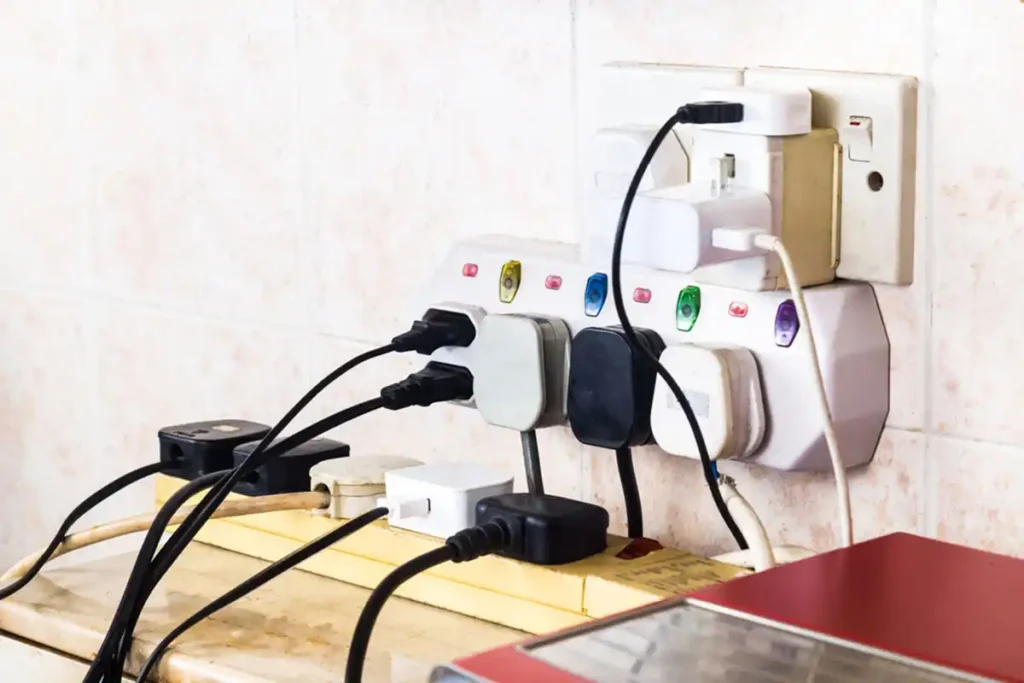
happens when too many appliances draw power from the same circuit at once, pushing the total current beyond what the circuit is rated to carry. This is by far the most common cause of tripping in Singapore homes, especially in older HDB flats wired for a lighter electrical load than modern households actually use. Air fryers, kettles, induction cookers, and air conditioners running together on one circuit are the classic trigger.

Short circuits

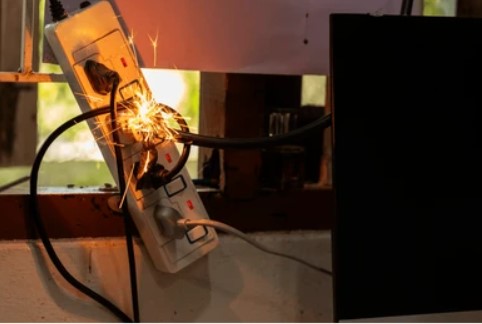
occur when a live wire makes unintended contact with a neutral wire, creating a surge of current far beyond the circuit's normal load. This is a wiring fault, not a usage pattern — it points to damaged insulation, a pinched cable, or a faulty appliance internally shorting out.

Ground faults

happen when a live wire contacts a ground wire or an exposed metal surface, often because of moisture or insulation breakdown. In Singapore's humidity, this is a particularly common failure point — wire insulation degrades faster here than in drier climates, and a Residual Current Circuit Breaker (RCCB) is specifically designed to catch this kind of leakage before it becomes a shock hazard.

The table below maps each cause to what you'd actually notice at home, so you can narrow things down before calling anyone.

What You Notice Likely Cause What's Happening
Trips only when a specific appliance turns on (kettle, AC, induction cooker) Overload Too much current draw on one circuit
Trips immediately on reset, sometimes with a burning smell or visible scorch mark Short circuit Live and neutral wires in unintended contact
Trips during or after rain, or when an outdoor/bathroom socket is used Ground fault Moisture or insulation breakdown triggering the RCCB
Trips randomly with no clear pattern, especially in an older flat Aging wiring or panel Could be any of the three, worsened by outdated infrastructure

If your situation matches the first row cleanly, you're likely dealing with a load problem you can manage yourself. If it matches any of the other three, you're looking at a wiring fault — which is where the next section matters.

How to Identify the Faulty Circuit

Before assuming the worst, narrow down exactly which circuit is causing the trip. This takes a few minutes and tells you — and any electrician you call — exactly where the problem sits.

Step 1: Locate your distribution board.

In most HDB flats, this is near the entrance or kitchen. Open the panel and look at the row of breakers. One or more will be visibly switched to the "off" position, or sitting in a middle position between on and off.

Step 2: Identify whether it's the MCB or the RCCB that tripped.

Your panel likely has individual Miniature Circuit Breakers (MCBs) for different zones of the flat, plus a Residual Current Circuit Breaker (RCCB) that protects the whole installation against leakage faults. If only one MCB has tripped, the fault is isolated to that specific zone. If the main RCCB has tripped, the fault could be anywhere on the circuits it protects — and it's signaling a leakage issue, not just an overload.

Step 3: Unplug everything on the affected circuit before resetting.

Switch off and unplug every appliance connected to that zone — don't just turn off the wall switch, physically unplug them. This removes any load or fault currently being detected.

Step 4: Reset the breaker with nothing plugged in.

Flip it back to "on." If it holds, the fault is in one of the appliances you unplugged, not the wiring itself.

Step 5: Reconnect appliances one at a time.

Plug devices back in individually, waiting a moment between each. If the breaker trips the instant a specific appliance is reconnected, that appliance — or the socket it's plugged into — is the source of the problem.

Step 6: If the breaker trips again with nothing plugged in, stop here.

This means the fault is in the wiring itself, not in any appliance. This is no longer a problem you can isolate further on your own, and it's the point where professional diagnosis becomes necessary rather than optional.

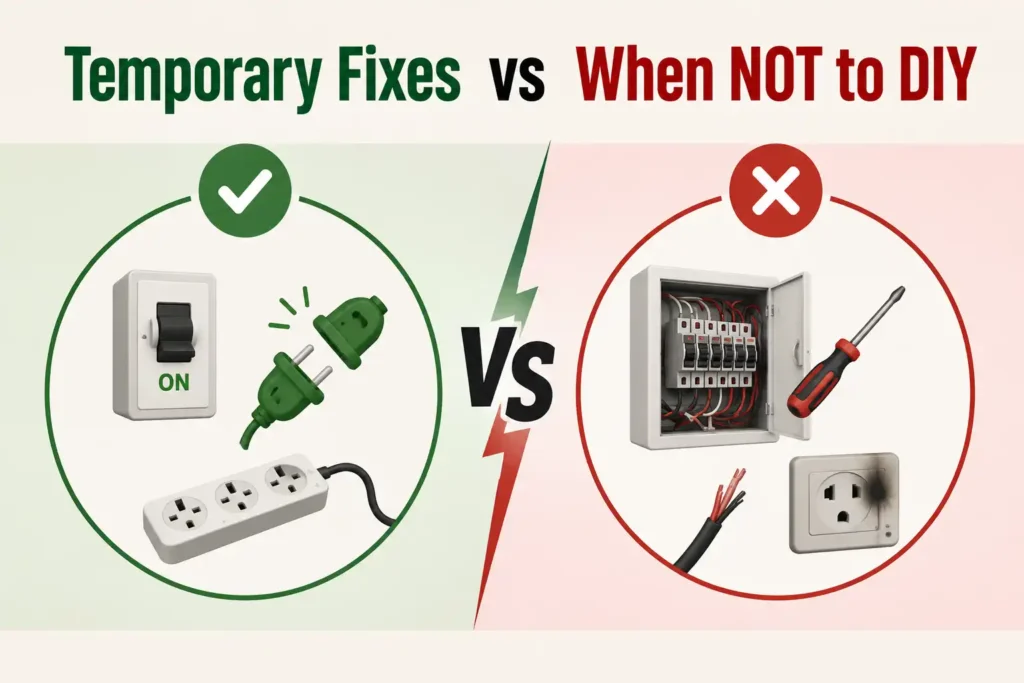
Temporary Fixes vs When NOT to DIY

Temporary Fixes vs When NOT to DIY

There's a meaningful difference between troubleshooting and repairing — and in Singapore, that line is also a legal one.

What's reasonably safe to do yourself

  • Reset a tripped breaker once, after unplugging the appliance you suspect caused it
  • Redistribute high-wattage appliances across different circuits instead of running them all from one socket or power strip
  • Unplug and stop using an appliance that consistently trips the breaker when connected, and have it checked or replaced
  • Visually check for an obviously damaged plug or scorched socket — without touching exposed wiring — and stop using it immediately

What crosses into territory you should not attempt

  • Opening the distribution board to inspect, touch, or rewire anything inside it
  • Resetting the same breaker repeatedly when it keeps tripping — each reset without finding the cause is a small gamble with an electrical fault that hasn't been identified
  • Replacing or repairing wiring, sockets, or the breaker itself
  • Continuing to use a circuit that trips on an RCCB reset with nothing plugged in

Resetting a breaker once after a clear overload is reasonable troubleshooting. Resetting it again and again, hoping it stops, is not a fix — it's a delay, and the fault behind it doesn't go away on its own. If your breaker trips immediately on reset with nothing connected, or trips repeatedly across different appliances, the wiring itself needs professional inspection.

EMA Licensed Electrician Requirement in Singapore

This is where Singapore's rules differ from a lot of general advice you'll find online: beyond basic troubleshooting, electrical repair work in Singapore isn't just recommended to leave to a professional — it's legally required.

Under the Electricity Act 2001, electrical work involving wiring, rewiring, or fault repair must be carried out or supervised by a Licensed Electrical Worker (LEW), licensed by Singapore's Energy Market Authority (EMA). This isn't limited to large renovation projects — it applies to a faulty circuit in your flat too, the moment the issue moves from "appliance problem" to "wiring problem."

Penalties for Unlicensed Electrical Work

The penalties for unlicensed electrical work in Singapore are substantial: fines of up to S$10,000, imprisonment of up to twelve months, or both, for individuals who carry out electrical installation work without the proper licence. Beyond the legal risk, there's a practical one — if unlicensed work later causes a fire or electrical incident, home insurance providers can deny claims on the basis that the work breached policy terms.

An EMA-licensed electrician carries professional liability for their work and is required to test, certify, and in many cases submit documentation to EMA confirming the fault has been properly resolved. That accountability is exactly what you're paying for — not just someone willing to open the panel, but someone who's legally responsible for getting it right.

If you've worked through the steps above and your breaker is still tripping — especially if it trips immediately with nothing plugged in, or trips across multiple unrelated appliances — the fault is in your wiring, and it's time to bring in a licensed electrician rather than keep resetting and hoping. Our electrical fault diagnosis and repair service is built around exactly this situation: tracing the fault back to its source, fixing it properly, and making sure your home's wiring meets the standard EMA requires.