Bathroom Waterproofing Singapore
NexFix Engineering waterproofs bathrooms the way HDB and condo rules actually require, with a proper membrane system and a real ponding test, not a quick coat before the tiler shows up.
Why Bathroom Waterproofing Matters
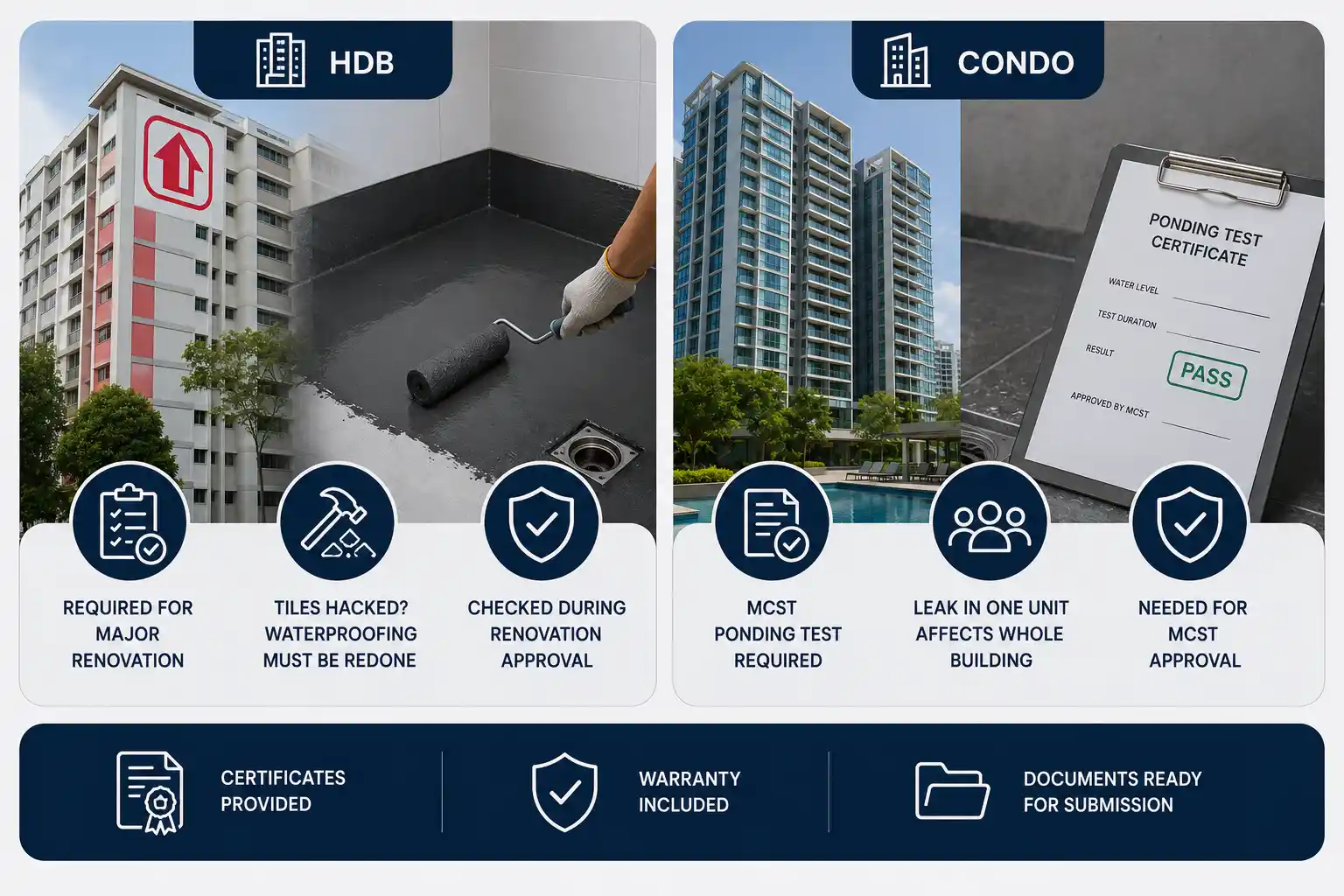
Water damage from a bathroom rarely stays in the bathroom. Once a membrane fails, water tracks through the floor slab and shows up as a stain on your neighbor's ceiling, which turns a $1,000 waterproofing job into a legal dispute and a much bigger repair bill. For HDB flats, waterproofing is a mandatory step during any major bathroom renovation, and both HDB and most condo MCSTs require proof of a passed ponding test before you can close the floor with tiles.
Our Bathroom Waterproofing Process
We follow the same sequence HDB and BCA guidelines call for, applied by hand at every corner and pipe junction, not just the open floor area.
Surface preparation.
The existing floor is cleaned, patched, and leveled so the membrane bonds evenly across the whole surface.
Primer application.
A primer coat seals the concrete and gives the membrane something solid to bond to.
Membrane application.
We apply a continuous waterproof membrane across the floor and up the walls in wet areas like the shower and near the floor trap, with a rounded angle fillet at every wall-to-floor junction so water can't track through the corner.
Protective screed.
A cement screed goes over the membrane to protect it before tiling begins.
Water ponding test.
The bathroom floor is flooded with water and left for 24 to 48 hours. If the water level drops or any seepage shows up below, the membrane fails the test and gets re-applied before tiling starts. We document the test with photos and timestamps as part of your handover pack.
Signs Your Bathroom Waterproofing Has Failed
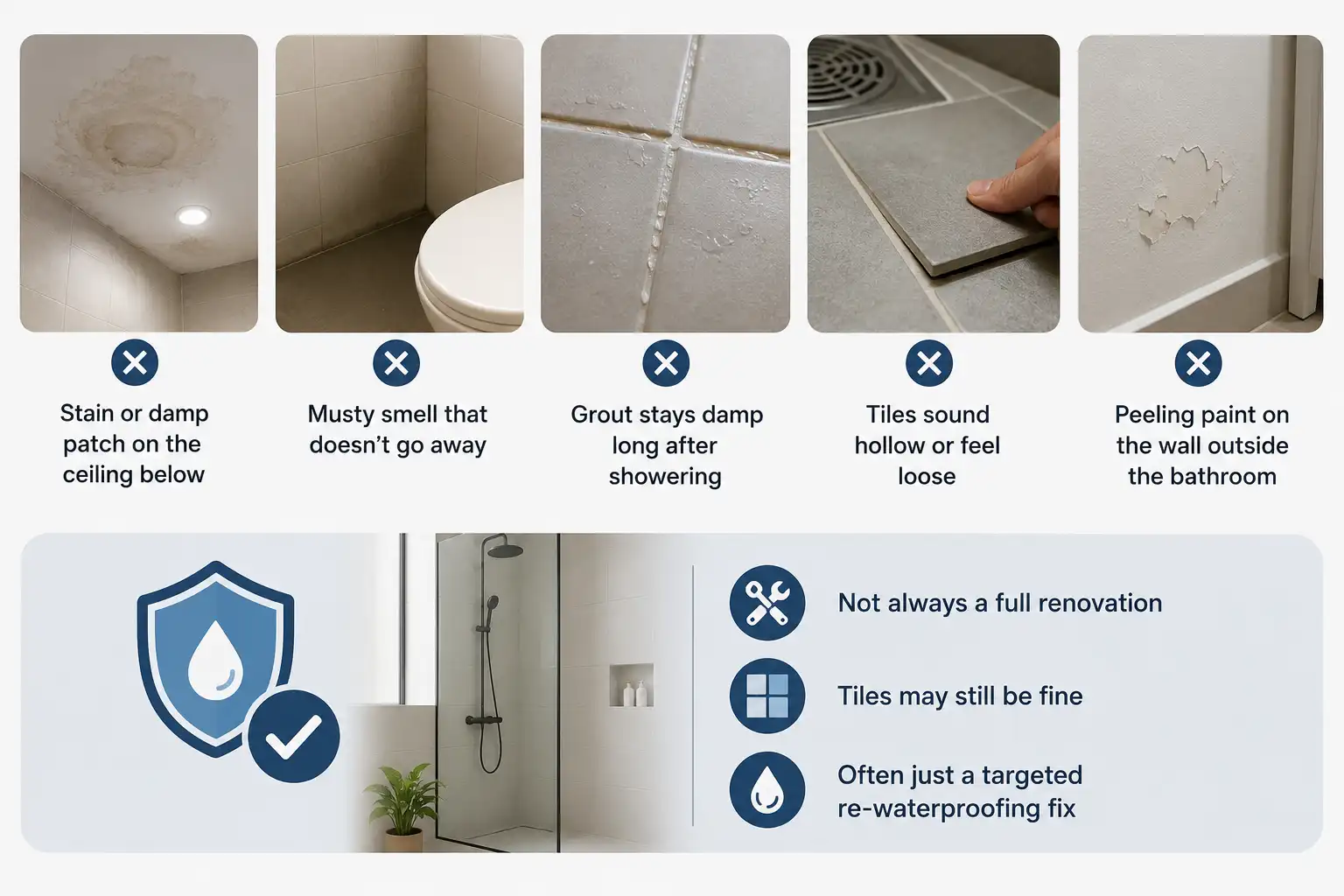
Watch for these warning signs, especially in an older unit that hasn't been re-waterproofed:
A stain or damp patch on the ceiling directly below your bathroom
Musty smell that doesn't go away with ventilation
Grout that stays damp long after you've finished showering
Tiles that sound hollow or feel loose underfoot
Peeling paint on the wall just outside the bathroom
None of these mean you need a full renovation. In many cases, the tiles are still fine and the fix is a targeted re-waterproofing of the affected section, not a full hack-and-redo.
HDB and Condo Requirements
If you're renovating an HDB bathroom, waterproofing isn't optional, it's required for any major renovation and gets checked as part of your renovation approval. Whenever bathroom floor tiles are hacked, building codes require the waterproofing to be redone, since the process of removing old tiles almost always damages the membrane underneath, even if it looked fine before. For condos, most MCSTs ask for the same ponding test documentation before signing off on your renovation, since a bathroom leak in one unit becomes a maintenance issue for the whole building. We provide the certificates and warranty paperwork you need for either submission.
Materials We Use
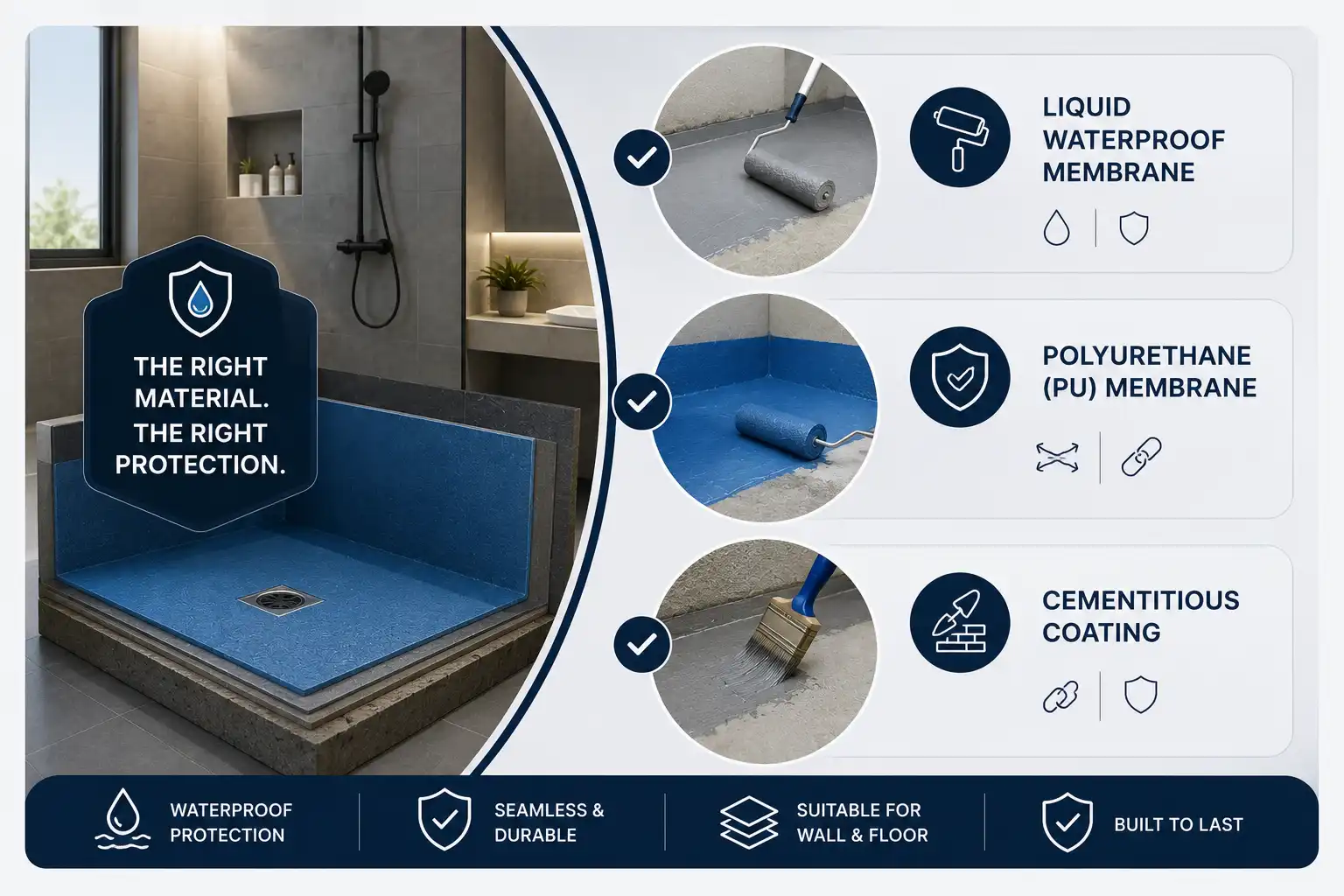
We match the membrane system to your bathroom's layout and how much wall coverage it needs, not a single default product.
Liquid waterproof membrane, brushed or rolled on for a seamless, continuous barrier across the floor and up the walls.
Polyurethane (PU) membrane, flexible and durable, a common choice for full bathroom renovations.
Cementitious coating, cement-based and easy to bond to concrete, often used alongside a membrane system for extra protection.
Bathroom Waterproofing Cost in Singapore
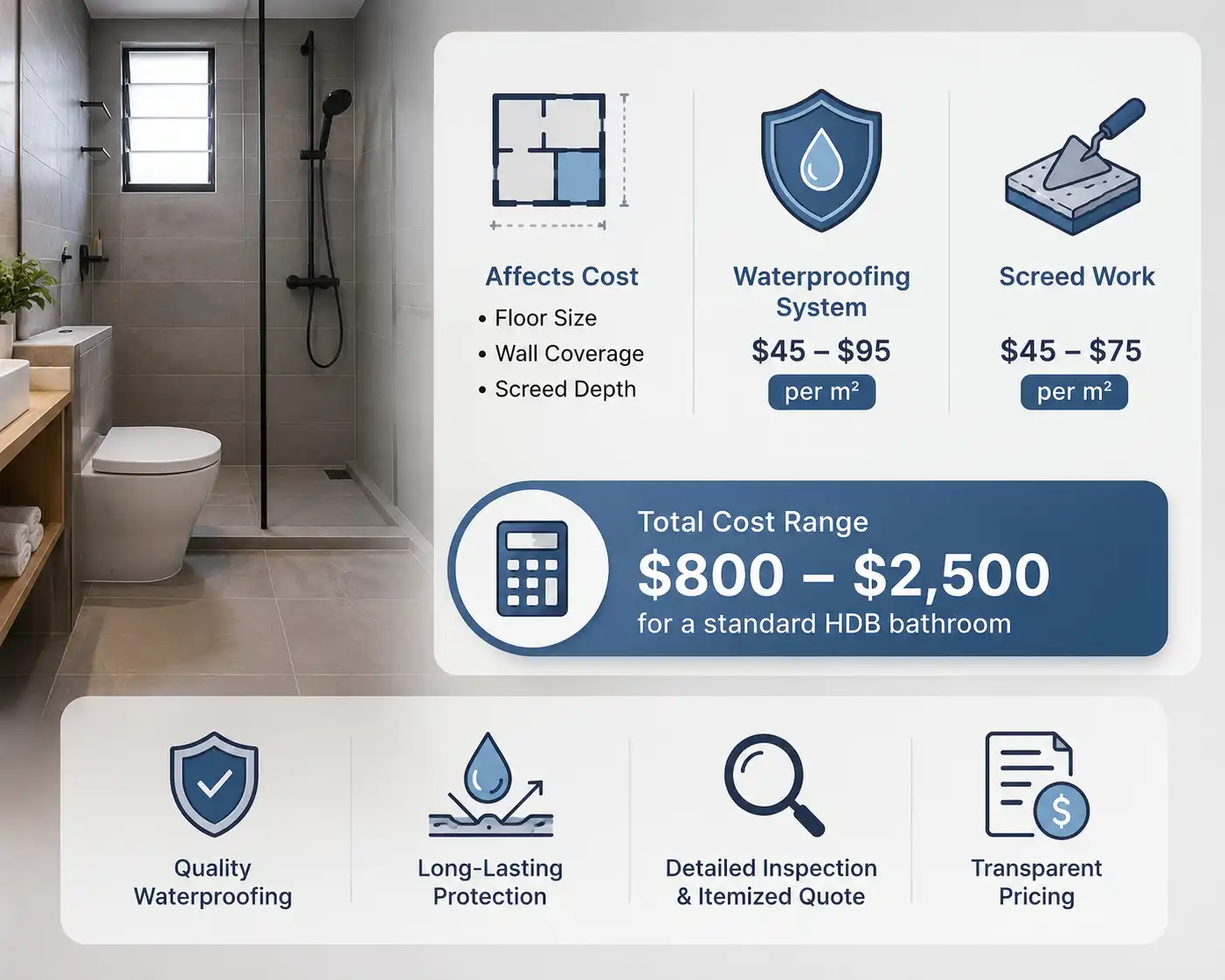
A standard HDB bathroom typically costs between $800 and $2,500 to waterproof, depending on floor size, how much wall area needs coverage, and the screed depth used. Larger or more complex bathrooms, or full hacking and re-membrane jobs, sit toward the higher end of that range. Pricing is usually calculated per square meter, with membrane systems running roughly $45 to $95 per square meter and cementitious screed work adding $45 to $75 per square meter on top. We give you a full itemized quote after inspecting your bathroom, so you know exactly what you're paying for before we start.
Why Choose NexFix Engineering
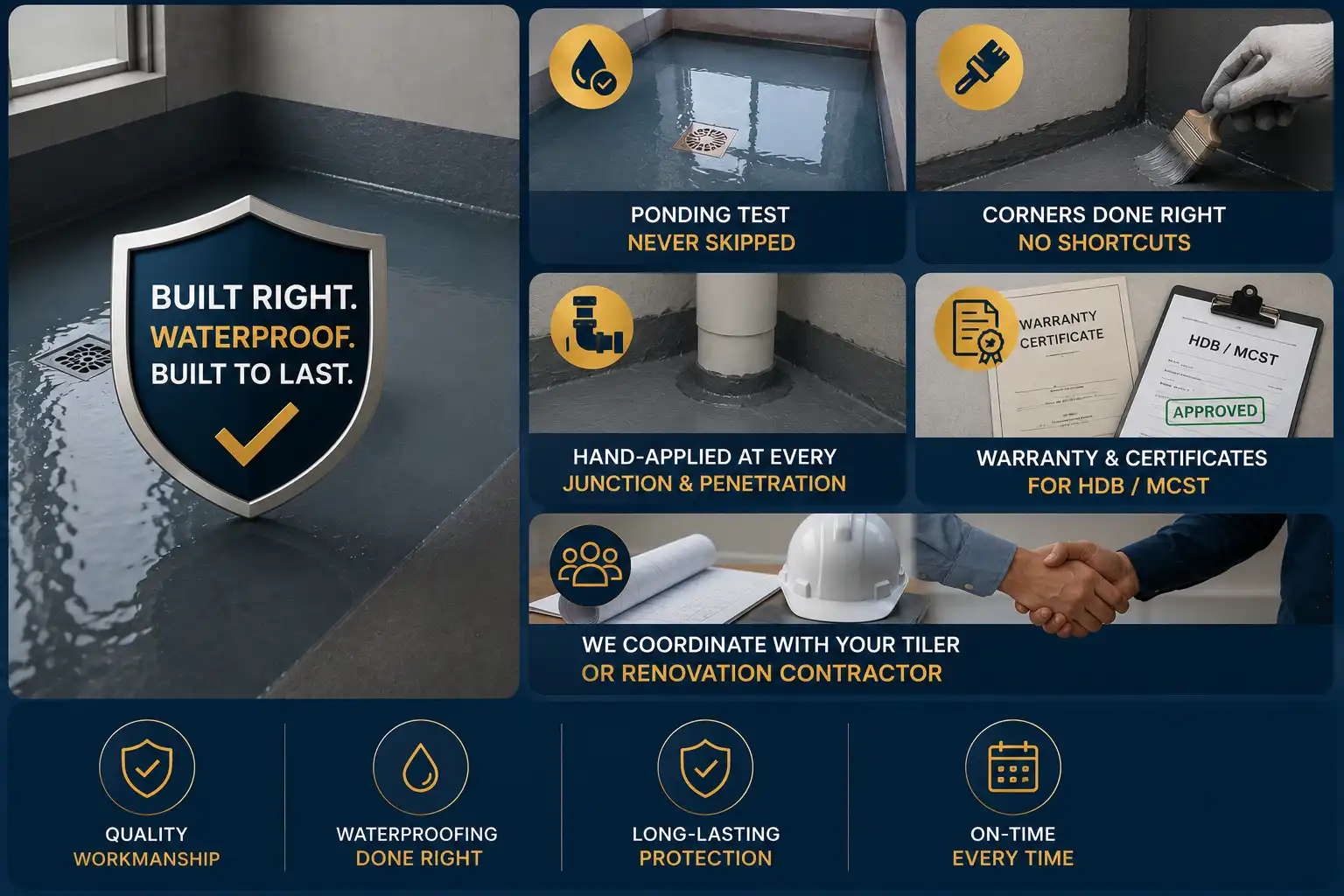
We don't skip the ponding test, and we don't rush the corners. Most waterproofing failures come down to poor workmanship, not bad materials, which is why we apply membrane by hand at every wall junction and pipe penetration instead of relying on a fast roller pass across the open floor. Every job comes with a written warranty and the certificates you need for HDB or MCST submission, and we coordinate directly with your tiler or renovation contractor so the timeline stays on track.
Frequently Asked Questions
Yes. Waterproofing is required for any major bathroom renovation in an HDB flat, and it must be redone whenever the floor tiles are hacked, since the hacking process typically damages the existing membrane.
Most professional membrane systems come with a 5 to 10 year warranty, and some premium systems are rated up to 15 years. How long it actually lasts depends on the material used and whether the surface was prepared properly before application.
It's a test where the bathroom floor is flooded with water for 24 to 48 hours to check for leaks before tiling. Skipping this step means any defect in the membrane stays hidden until water damage shows up later, often in the ceiling below.
If the tiles and existing waterproofing are still in good condition, a targeted repair or membrane overlay in the affected area is sometimes possible. If the membrane has failed across a larger area, full hacking and re-waterproofing gives a more reliable result.
A standard bathroom waterproofing job, including the ponding test, usually takes 3 to 5 days from surface prep to a passed test result, before tiling can begin.
Get a Free Bathroom Waterproofing Quote
Whether you're renovating from scratch or fixing a leak that's already shown up downstairs, NexFix Engineering gets your bathroom properly sealed and certified. WhatsApp us at +65 8265 8097 or email nexfixsg@gmail.com for a free inspection and an itemized quote.