
Water damage is one of those silent, expensive nightmares that no homeowner in Singapore wants to face. Whether you are living in a cozy HDB flat, a sleek condominium, or a spacious landed property, a leaking bathroom can turn into a massive headache overnight. It breeds nasty mould, stains your beautiful ceilings, loosens your tiles, creates musty smells, and can even trigger stressful disputes with your neighbors downstairs when water starts dripping into their homes.
Most of us don’t even think about bathroom waterproofing HDB solutions until we spot a damp patch on the wall or get a knock on the door from the neighbor below. By then, the damage is done, and fixing it gets complicated and costly. Think of a proper waterproofing system as an invisible shield beneath your tiles—it prevents moisture from seeping into the concrete slab and damaging your home’s foundation.
If you are gearing up for a bathroom renovation, fighting a stubborn leak, or just want to figure out how waterproofing Singapore works, you are in the right place. This guide breaks down the best waterproofing methods, current 2025 market costs, strict HDB and BCA rules, and the exact questions you need to throw at a contractor before hiring them.
Let’s look at how to catch the early warning signs so you can protect your home for the long run.
Why Bathroom Waterproofing Matters in Singapore
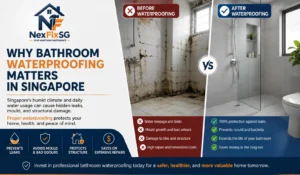
Singapore’s tropical weather is a magnet for moisture. High humidity, daily hot showers, and constant water exposure place immense stress on your bathroom floors and walls. Over time, even a microscopic tear in the waterproof layer lets water seep right through.
Unlike a cracked grout line or peeling silicone that you can easily see, a failed waterproofing membrane hides beneath the surface, quietly doing damage long before you notice it.
Investing in proper bathroom waterproofing helps you:
- Keep the peace: Stops water from leaking into your neighbor’s flat.
- Protect your structure: Prevents concrete cancer and structural decay.
- Breathe easier: Keeps unhealthy mould and mildew away.
- Save your walls: Prevents bubbling paint and ugly yellow ceiling stains.
- Save money: Avoids terrifyingly high structural repair bills down the road.
For HDB dwellers, keeping your waterproofing intact is incredibly crucial because a single leak can affect the unit below, leading to mandatory repairs and unexpected friction.
Pro Tip: If you already see damp patches on your walls, don’t wait. Getting a professional eye on it early can tell you if you just need a targeted patch-up or a full system replacement. Check out the Nexfix Bathroom Leak Repair service page to see how a quick fix can save you a full renovation.
Why Singapore Bathrooms Leak
Bathrooms rarely start leaking out of nowhere. It is usually a slow process as materials age and wear down. Here is why things go wrong:
Ageing Waterproof Membranes
Nothing lasts forever, and that includes waterproofing. Depending on how well it was installed, a waterproof membrane generally lasts between 10 to 20 years. If you live in an older HDB flat, the original waterproofing layer might simply be reaching the end of its life, losing its flexibility and cracking under the floor.
Cracked Grout and Tile Joints
Many people think that tiles and grout are completely waterproof. They aren’t. Grout is naturally porous and cracks easily due to slight movement in the house, temperature changes, or heavy use. Once the grout gives way, water slips underneath, putting all the pressure on your hidden membrane.
- Watch out for: Missing grout, darkened lines, loose floor tiles, or a floor that stays damp hours after a shower.
Poor Workmanship During Renovation
Sadly, a major reason for leaks in Singapore is a rushed renovation job. Shortcuts like skipping surface cleaning, applying a membrane too thinly, rushing the drying time, or leaving gaps around the floor waste pipes will inevitably cause a leak a few months down the road. This is why working with a specialized team is so important.
Damaged Plumbing Pipes
Sometimes the waterproofing isn’t to blame at all. A hidden pipe leaking inside the wall or under the floorboards can look exactly like a waterproofing failure.
- Common culprits: Corroded fittings, loose pipe joints, or a faulty shower mixer.
- If you suspect this, you can browse through Nexfix’s Plumbing Services to trace the real issue before you start hacking your tiles away.
Floor Trap Problems
The drainage trap is a prime spot for leaks. If the seals around the drain break down or if the trap wasn’t aligned properly during construction, water bypasses the membrane completely. Look out for water pooling right around the drain or persistent musty smells.
Building Movement & Climate
Buildings naturally shift and settle. These tiny movements cause rigid waterproofing materials to crack. On top of that, Singapore’s non-stop humidity means bathrooms rarely dry out completely, which accelerates how fast silicone and tile adhesives break down.
Signs Your Bathroom Waterproofing Has Failed
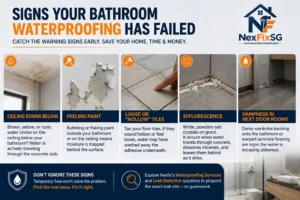
Catching a leak early can save you thousands of dollars. Keep an eye out for these telltale signs:
- Ceiling Stains Below: If the ceiling below your bathroom has brown, yellow, or rusty water circles, water is actively traveling through the concrete slab.
- Peeling Paint: If the paint right outside your bathroom or on the ceiling is bubbling and flaking off, moisture is trapped behind it.
- Loose or “Hollow” Tiles: Tap your floor tiles. If they sound hollow or feel slightly loose, the water has washed away the adhesive underneath.
- Efflorescence: This is a fancy word for those white, powdery salt crystals that form on your tile grout. It happens when water travels through concrete, dissolves minerals, and leaves them behind as it dries.
- Dampness in Next Door Rooms: If your bedroom wardrobe backing onto the bathroom feels damp, or your bedroom laminate flooring is warping, the water is escaping sideways.
Don’t rely on temporary fixes like slapping a layer of retail sealer over old grout. If you notice these signs, explore Nexfix’s Waterproofing Services and dedicated Leak Detection options to pinpoint the exact leak site without playing guessing games.
How Bathroom Waterproofing Works
What you see are the beautiful tiles, but the real work happens underneath. A solid waterproofing setup is done in structured, careful layers:
[ Top Layer: Your Bathroom Tiles ]
↓
[ Middle Layer: Protective Concrete Screed ]
↓
[ Core Layer: Continuous Waterproof Membrane ] (Crucial Step!)
↓
[ Base Layer: Clean Concrete Substrate Slab ]
- Inspection: Technicians check the floor traps, pipe penetrations, and joints to map out the issue.
- Surface Prep: The concrete base is thoroughly cleaned, smoothed, and repaired. A membrane won’t stick to a dusty or cracked floor.
- Application: The chosen membrane is applied seamlessly over the floor and pulled up the walls (usually up to 30cm in dry areas and 1.8m in shower areas).
- Curing: The layer is left alone to fully dry and harden into a rubbery, watertight shield.
- The Ponding Test: The bathroom floor is plugged, filled with water, and left for 24 to 48 hours. If the water level doesn’t drop and the downstairs ceiling stays dry, the job is a success. Never let a contractor skip this step.
- Screeding & Tiling: A protective concrete screed layer is laid over the membrane so it doesn’t get punctured, and then your new tiles go on top.
Choosing the Right Method: Membrane vs. Liquid Waterproofing
There are three primary options used in Singapore today. Each has its ideal use case:
| Feature | Liquid Membrane | Sheet Membrane | Cementitious Waterproofing |
| Flexibility | Excellent (Stretches well) | Very Good | Moderate |
| Seamless Finish | Yes (No joints at all) | No (Has seams) | Yes |
| Best For | Complex layouts & HDB flats | Large, flat areas | Rigid concrete structures |
| Lifespan | 10–20 years | 15–25 years | 8–15 years |
| Cost | Moderate | Higher | Lower |
- Liquid Membranes are highly popular for HDB spaces because they act like liquid rubber—molding perfectly around tight corners and floor traps.
- Sheet Membranes offer incredible durability and consistent thickness but require expert hands to seal the overlapping seams perfectly.
Can You Waterproof Without Removing Tiles?
Yes, but only if the damage is minor. If your actual underground membrane is perfectly fine and water is just sneaking through old grout lines, a contractor can scrape out the old grout, inject epoxy into minor cracks, and apply a specialized clear coating. It is faster and cheaper. However, if your underlying membrane is torn or decayed, surface fixes are just a temporary bandage—hacking and replacing it is the only permanent cure.
BCA and HDB Rules for Bathroom Waterproofing
Before you bring out the hammers, you need to play by the rules to avoid heavy fines or legal issues.
- Mandatory Application: Under HDB guidelines, if you are replacing your bathroom flooring, you must lay down a proper waterproofing membrane before installing the new tiles.
- HDB Registered Contractors: Always ensure your contractor knows HDB renovation regulations inside out. Rushing a job that violates structural integrity can land you in trouble with management.
- Condominiums (MCST): Condo living requires approval from your building’s management office before any hacking or wet work begins. They often enforce specific working hours and debris disposal rules.
Bathroom Waterproofing Cost in Singapore (2026 Guide)
How much should you expect to budget? Here is a breakdown of estimated market rates for 2025:
Estimated Price
| Service Type | Estimated Cost (SGD) |
| Minor Grouting & Sealing Repairs | $180 – $600 |
| Professional Leak Detection Inspection | $150 – $400 |
| Waterproofing Without Hacking (Overlay/Injection) | $500 – $1,500 |
| Full HDB Bathroom Waterproofing (With Hacking) | $2,500 – $4,500 |
| Condo Bathroom Waterproofing | $2,800 – $5,500 |
| Landed Property Bathroom Waterproofing | $3,500 – $7,000+ |
Note: These are standard 2025 market estimates. Final pricing depends on your bathroom’s square footage, layout complexity, and the current state of the concrete underneath.
What Drives the Price Up or Down?
- The Scale of Damage: If water has rotted the structural concrete screed, it takes more labor and materials to rebuild the floor base.
- Layout Complexity: Tight layouts with built-in bathtubs or intricate piping take longer to seal properly.
- Warranty: A cheap, no-name contractor might offer a zero-warranty quote, while established specialists charge slightly more to offer a reliable, multi-year workmanship warranty in writing.
10 Questions to Ask Your Contractor Before Signing
To protect yourself from hidden fees or shoddy work, make sure to ask these exact questions:
- Which specific waterproofing system are you using for my layout, and why?
- Does this quote include professional leak detection, or is that a separate fee?
- Will you conduct a mandatory 24- to 48-hour ponding test before laying the tiles?
- What brands of membranes and sealants do you use?
- Is this quote truly fixed, or will there be extra disposal or screeding charges later?
- What does your workmanship warranty cover, and how long is it valid?
- Are your workers experienced with HDB renovation guidelines?
- How many days will my bathroom be completely out of service?
- How do you plan to manage and contain construction dust in my home?
- Can you show me real reviews or photos of recent local projects you’ve completed?
Why Homeowners in Singapore Trust Nexfix
Waterproofing isn’t just about painting a dark liquid onto a floor and hoping for the best. It takes accurate troubleshooting, high-grade commercial materials, and precise execution to make sure a leak never returns.
At Nexfix, we skip the guesswork. We identify the precise root cause of your bathroom leak before proposing a solution, ensuring you pay only for what you need. Designed specifically to handle Singapore’s unique building structures and tropical climate, our services bring you total peace of mind.
When you team up with Nexfix, you enjoy:
- Thorough, transparent leak assessments.
- Tailwind solutions for HDB, condo, and landed homes.
- Clean, professional execution with zero hidden costs.
- Long-lasting materials that stand up to daily moisture.
Need Help With Something Else?
Explore our specialized services to keep your home in top shape:
- Bathroom Leak Repair
- Waterproofing Services
- Leak Detection Solutions
- Professional Plumbing Services
- All-In-One Home Maintenance
Frequently Asked Questions
How long does bathroom waterproofing normally last?
When done by professionals using top-tier materials, a system lasts between 10 to 20 years.
Can you fix a leak without hacking up my tiles?
Yes, if the issue is caught early and is localized to your grout lines or pipe seals. We can use chemical injections or clear waterproofing sealants. But if your main membrane is completely torn underground, hacking is the only permanent solution.
Why does a ponding test matter so much?
It is your safety net. By filling the floor with water before tiling, it proves the waterproofing works. Finding a leak after you have laid down gorgeous, expensive tiles is a disaster.
How long does a full waterproofing job take?
Typically between 3 to 7 days. This allows proper time for the concrete to dry, the membrane to cure completely, and the ponding test to run its course.
Conclusion
A leaking bathroom isn’t just an eyesore—it is a countdown to structural damage, mould growth, and expensive disputes with neighbors. Understanding how your bathroom handles water, picking the right repair methods, and working with a trusted specialist is the smartest way to safeguard your investment.
Whether you want to upgrade your current bathroom layout or stop a tricky leak in its tracks, a professional inspection is the best place to start. Let Nexfix bring you reliable leak detection, clear pricing, and expert craftsmanship tailored perfectly to your home.
Ready to get your bathroom fully secured? Reach out to the team today!